Why Your Business Needs OCR Technology? Key Aspects You Must Know
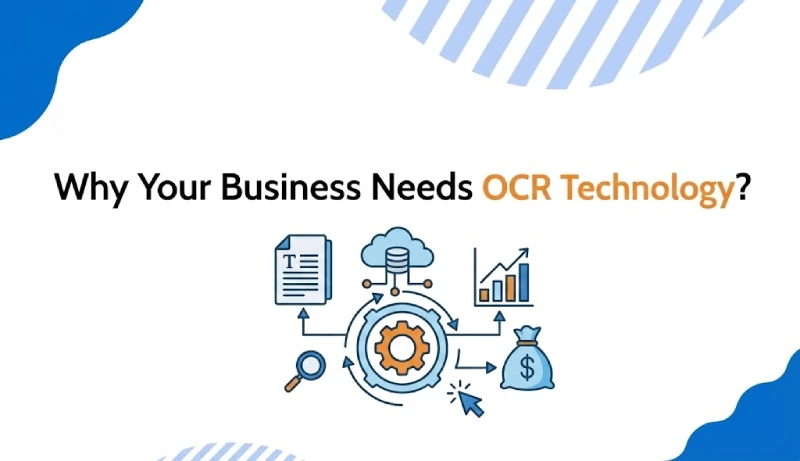
Digitization and advancements in technology are the backbones of any successful business. That’s the reason companies are quickly shifting to computerize their database, reducing workforce requirements.
Businesses have to shift their data into a digital record at some stage. However, the traditional methods of data entry and management are time-consuming and less efficient.
To tackle these issues, Optical Character Recognition (OCR) technology is the perfect solution that expertly meets the modern-day digitization challenges. It helps organizations to minimize the risk of error in documentation, as well as upgrade the database setup.
Let’s dive into the details of how OCR technology is revolutionizing the world and why it has become so important for businesses nowadays.
Why Does Your Business Need OCR Technology? 6 Key Benefits Explained
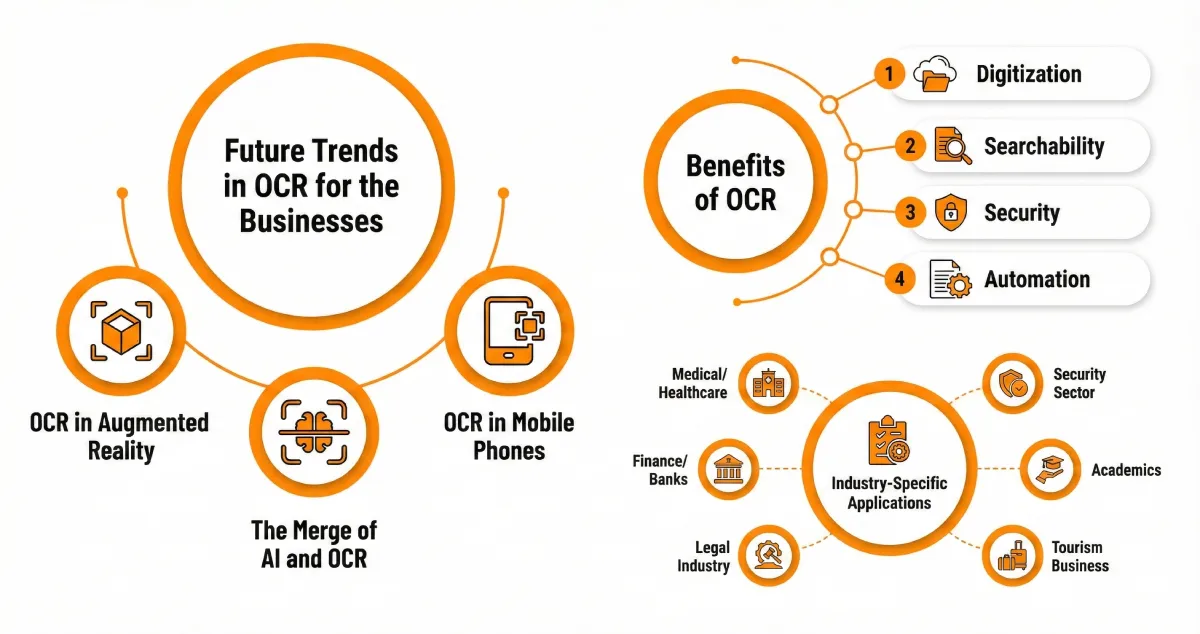
OCR stands for Optical Character Recognition, a modern-day technology advancement in all general and tech-based businesses. It scans a document or an image, extracts its text, and converts it into an editable and machine-readable format.
Manual data entry for invoices, contracts, and product labels, or managing the finance & logistics section, is not only tedious but expensive. Hiring a specialised workforce and bearing the risk of errors is not logical. This is the point that inclines companies to shift towards the latest OCR-based setups, ensuring cost-effective, accurate, and automated systems.
Here are the key benefits and advantages of shifting businesses to OCR technology:
Infinite and Easier Access to Digitized Data
Transitioning from manual data entry to OCR-powered tools helps streamline operations. Users can conveniently update entries, modify records, or search through extensive data within seconds. No need to perform lengthy entries and no hassle of manual cross-checking. Once you make all your documentation (text or images) digitized, accessing any details is just a click away.
Automation
Many businesses still rely on traditional methods for documentation and record-keeping. However, OCR technology has introduced an easy way to automate tasks with greater accuracy, speed, and efficiency. From data analysis and information extraction to digital record management, OCR reduces manual work with a lower risk of errors.
Lesser Turnaround
OCR technology doesn’t just help perform the data processing efficiently, but also reduces its turnaround time. With it, users can convert a simple scanned document into modifiable and easily searchable content in a matter of seconds. All this reduces the need for manual labor, hence reducing the cost of specialized hirings and long-term expense management.
Functional Precision
No matter how dedicatedly and carefully you enter your business details manually, there is still a risk of mistakes. However, using an Optical Character Recognition system, you can enter, edit, improve, and digitize any file with a high degree of precision. Simply scan the file and save it to your system. After that, you can extract text, edit or validate the details, and add security checks, all under one platform.
Cost-Effective Solutions
One of the biggest advantages of OCR technology is its cost-effectiveness. Businesses no longer need to invest heavily in manual data entry, paper storage, or extensive infrastructure. With OCR, a simple scanner or even a smartphone camera is enough to digitize documents. This eliminates extra costs for printing, storage, and shipping, helping companies save money while improving efficiency.
Enhanced Productivity
An increase in productivity results in enhanced business profit. Thanks to the OCR technology, which leads to a significant boost in both. Automated data extraction and handling lead to a quick rise in data entry and processing tasks. No need to save a bulk of files, manage records, or search for specific information manually. Just digitize your database and boost your productivity to the highest level.
Improved Customer Trust & Retention
The highest precision, best service standards, and quick problem-solving are the keys to building customer loyalty and conversion rate. OCR plays a vital role in this by ensuring error-free data processing, faster transactions, and smoother customer experiences. By reducing mistakes and improving transparency, OCR helps build trust and long-term relationships among both B2B and B2C businesses.
Types of Businesses Benefiting the Most From OCR Technology
Banks: Banking is the most crucial sector in a country that requires the most efficient and secure system to manage customers’ databases and records digitally. With the advanced OCR software, banks now process invoices, bank statements, or transactional records in an editable and machine-readable format. No privacy issues or security flaws.
Legal Industry: The legal industry handles a bulk of paperwork, including contracts, agreements, case files, and court documents. Converting the legal paperwork into a digitally organized database ensures efficient record management and client privacy.
Security: In the security sector, quick and accurate data processing is crucial. OCR helps convert access forms, visitor logs, and surveillance reports into a digital format, making the process error-free and protected.
Medical/Healthcare: The healthcare industry manages a huge volume of data, including patient records, prescriptions, diagnostics, and insurance claims. The OCR-backed software not only helps reduce paperwork and speed up the process but also minimizes human errors.
Education: OCR serves academics in multiple ways, such as digital handouts, books, PDFs, and more. Moreover, managing the documents digitally, such as student records, exam material, admission forms, and research material into easily searched and editable digital files, is another marvelous achievement of OCR.
Travel and Tourism: Managing customers’ passports, visas, bookings, and other travel documents was once a hectic task. The OCR-backed advancement in technology has now made the system convenient, secure, and efficient.
How to Use the OCR Software in Businesses?
A typical OCR tool works in a simple way. You just need to follow the quick steps mentioned below to add and implement an OCR functionality in your system successfully:
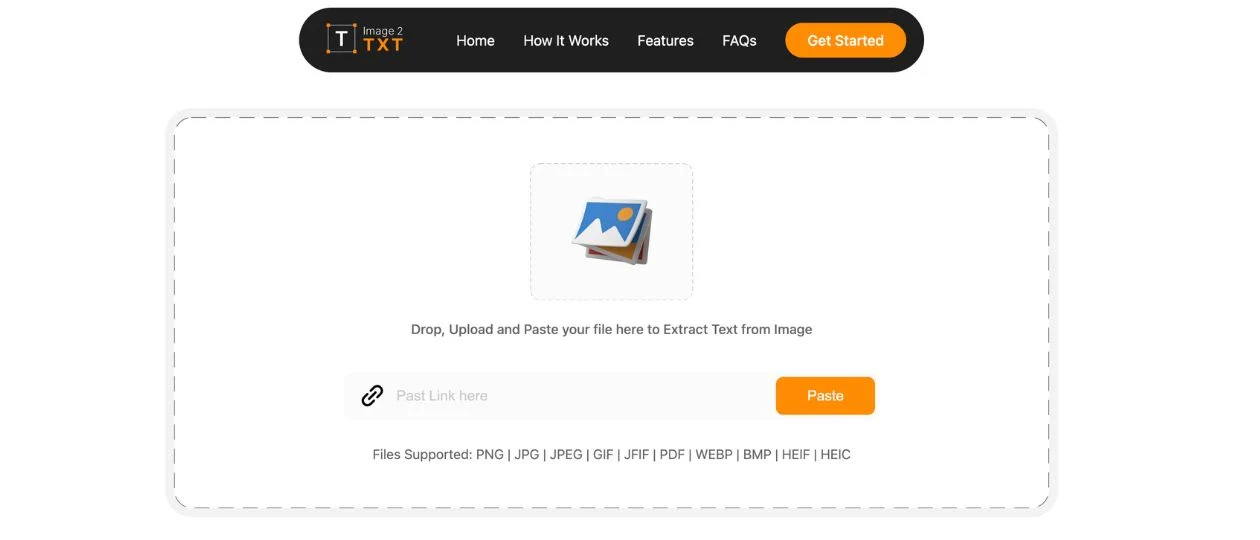
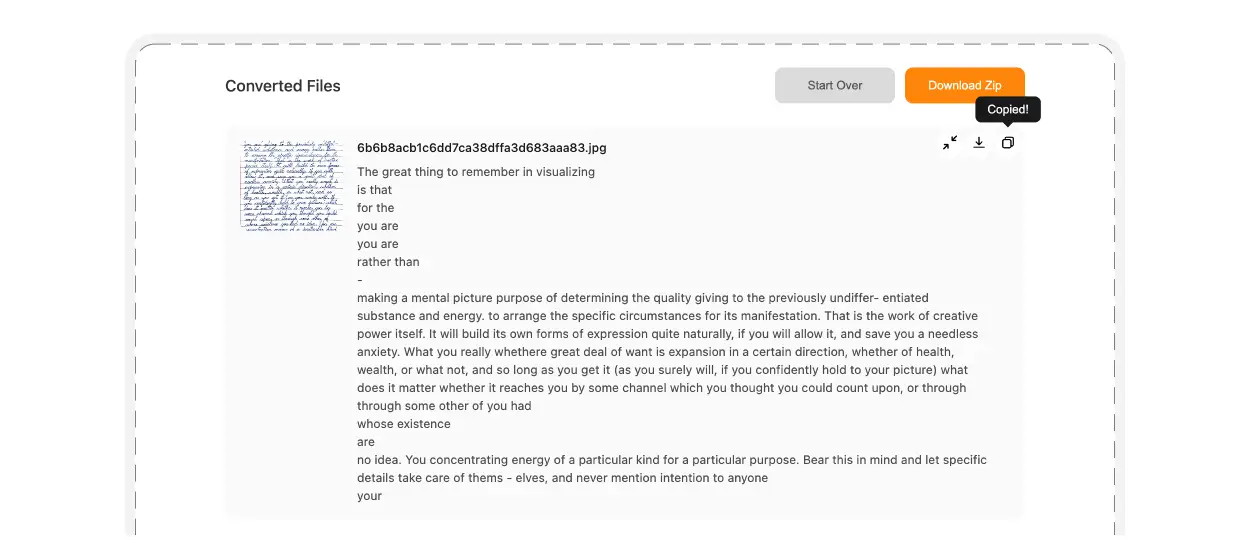
- Search for a reliable online OCR tool. You can use our image to text tool here.
- You will find an option of ‘Browse’ or ‘Upload’ on the display. Click the tab to choose the
image you want to edit.
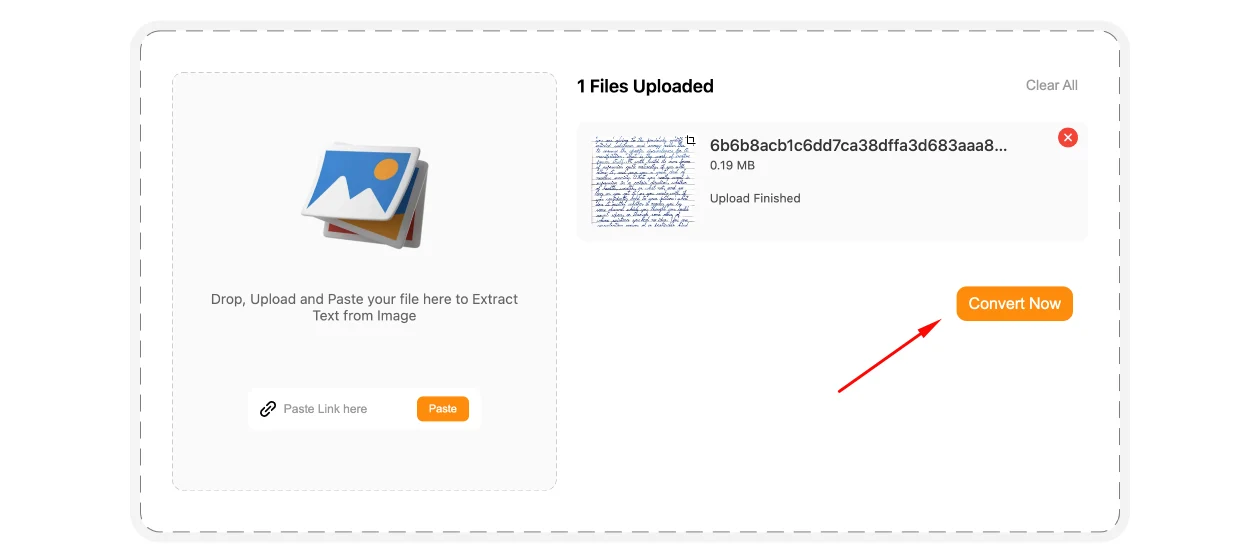
- Once the uploading completes, click the ‘Convert’ tab to modify a scanned photo's text to
editable content.
- A pop-up will appear when the image text converts into machine-readable content. Download
the file to your device by selecting the proper format.
Types of Documents that Can be Digitized with OCR
Optical Character Recognition is a powerful tool that changes a printed or handwritten text into a digital file. It saves time, reduces errors, and makes information easier to manage. Here are some common types of documents that can be managed with OCR.
- Legal Documents: Law firms need to save and maintain heavy data for legal agreements, contracts, and clients’ case files. With OCR, lawyers can easily convert their files into a digital format and organize them in a secure way.
- Medical Records: Maintenance of patients’ medical records, prescriptions, and treatment histories manually is very hectic. Integrating OCR software in healthcare proves to be a game-changer.
- Educational Material: With Optical Character Recognition software, digitizing books, research papers, and exam sheets has become much easier.
- Invoices and Receipts: Businesses deal with many invoices and receipts a day. With OCR, these paper documents are scanned and saved as digital, editable files.
- Identity Documents: Industries like banking, travel, and insurance often need identity verification through ID cards, passports, driving licenses, etc.
- Others:
- Shipping and Logistics: Shipping labels, delivery reports, and bills can be scanned with OCR.
- Insurance Forms: Policy documents, claim forms, and customer applications.
- Government Records: Tax forms, voter IDs, property documents, and employees’ salary records.
- HR: Resumes, Payroll slips, salary slips, and employee reports.
- Printed Media and Archives: Newspapers, magazines, and historical records.
Key Challenges in OCR Adoption
Although OCR technology has transformed the way businesses work and manage their data, its adoption still has some challenges. The most common issues companies face while integrating OCR with their system are mentioned below:
Adapting OCR to Existing Workflow
As many businesses still depend on traditional methods, integrating OCR tools with existing workflows needs time and proper training to adjust. Sometimes, managers may face system compatibility issues, bugs, or technical errors.
Budget and Implementation Costs
With Optical Character Recognition technology, businesses cut the long-term expenses. However, these setups may require an initial high cost for purchasing OCR software, integrating it with the existing system, upgrading hardware, and training staff.
Limitation in Accuracy
OCR technology has improved significantly, but it is still not always 100% accurate. The handwritten text, poor-quality scans, and complex document layout can create hurdles in precise data extraction.
Data Privacy and Security Risks
Since OCR technology is widely used in the financial and banking sectors, it needs a high degree of privacy and confidentiality. Without proper encryption and security checks, there remains a risk of a security breach through unauthorized access.
Future Scope of OCR Technology
Optical Character Recognition (OCR) has made multiple advancements in the field of technology, yet some are still in the developmental stages. Continuous beta testing is carried out to assess its operational efficiencies.
The Role of Artificial Intelligence in OCR
Artificial Intelligence has improved OCR functionality a lot by making it more accurate, faster, and adaptable. A major addition is Intelligent Character Recognition or ICR, which combines Machine Learning (ML) and Natural Language Processing (NLP) with OCR.
Mobile-Based OCR Solutions
The increasing trend of smartphone usage has made mobile-based OCR solutions more popular across businesses worldwide. Only using a mobile camera, users can conveniently scan invoices, receipts, contracts, medical reports, and more with just a click.
Integration of OCR with Augmented Reality (AR)
The integration of OCR with Augmented Reality (AR) opened doors for new possibilities in education, tourism, and retail businesses. By merging Augmented Reality with OCR, businesses can create smarter, more engaging solutions for better efficiency and user satisfaction.